Category: EdTech for Active Learning

Experiment with interactive tools and techniques for engaging students through technology.

Gamification or Game-Based Learning?

Reading Time: 7 minutesYou might have heard the terms “gamification” or “game-based learning” used in educational circles, but you may not have yet had the chance to explore the differences between these approaches. They both aim to make course and learning experiences more engaging, but they do so in very distinct unique ways. This post aims to show an example of each applied...

Incorporating Interactive Learning in Asynchronous Courses

Reading Time: 3 minutesInteractivity is a key consideration when developing an asynchronous course. Incorporating interactive tools and activities helps foster students’ active engagement and reduces the risk of passive learning. Interactivity refers to students’ ability to actively engage with course materials through tools, collaborative assignments, and dynamic activities. Rather than passively consuming information, students are invited to participate, respond, and engage with the...

How Gamification Supports Learning

Reading Time: 6 minutesGamification is incorporating game elements into non-game contexts. In education, this often involves using game elements like points, badges, leaderboards, and challenges to make learning more active, interactive, and enjoyable. By turning traditional educational activities into game-like experiences, educators can create a more dynamic and engaging learning environment. In this post, you’ll find some evidence that supports the use of...

Lori Martin and Rene Letoile Incorporate Gamification in Brick and Stone Mason Programs

Reading Time: 4 minutesLori Martin first taught at Conestoga in 2014. Since 2019 she has been teaching in Conestoga’s Trades and Apprenticeship, specifically in the Masonry Apprenticeship and Construction Techniques Multi-Trade programs. Lori brings with her 12 years as a Red Seal Mason, including valuable experience as a foreman. She enjoys working with future masons, helping them develop necessary skills, from hands-on construction...

Active Learning in Online Synchronous Classrooms: Padlet

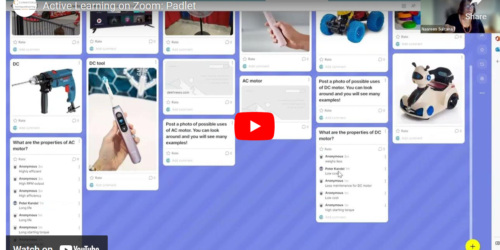
Reading Time: 3 minutesPromoting active participation in class is beneficial for students because they are incorporated into the activities and are contributors to their learning process. Essentially, students obtain and retain more knowledge by doing. It can be challenging to find ways to keep students engaged in these ways when teaching online. Padlet is an innovative tool that can help enhance participation, as...

Active Learning in Online Synchronous Classrooms: Mentimeter Word Clouds

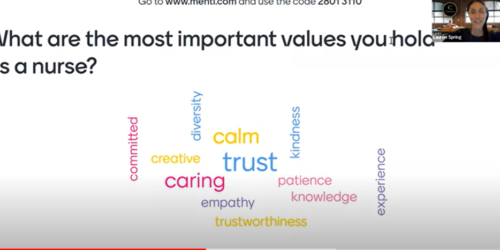
Reading Time: 2 minutesThe power of connecting ideas, feelings, and words in class is beneficial for the learning process, it can help clarify understanding and allow students to get a sense of their peers’ reactions to a key topic, and it also has the potential to help students track how their thoughts and feelings about certain course-related themes evolve over time. Mentimeter word...

Active Learning in Online Synchronous Classrooms: Whiteboards

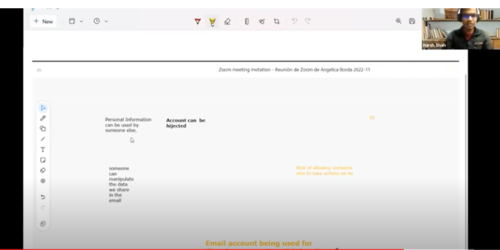
Reading Time: 2 minutesMost of us are familiar with using whiteboards in classrooms to explain a topic, highlight key ideas, or to allow students to contribute collaboratively; much of this can also be achieved using the whiteboard feature on Zoom. In this short video, we’ll see an example of how Nasreen invites students to work together and exchange and share ideas using the whiteboard...

Active Learning in Online Synchronous Classrooms: Breakout Rooms

Reading Time: 4 minutesConestoga College encourages teamwork and collaboration in diverse groups where students can learn from each other. Small group discussions in person or virtually help promote peer-to-peer interaction, critical reflection, and perspective and content sharing. In this short video, we’ll see an example of how Lauren promotes collaborative work through the breakout room tool in Zoom.  Breakout group sessions may be...

Active Reading Strategies for Digital Readers

Reading Time: 10 minutesLearners will score lower in a comprehension test of a digital text compared to a paper text. Why might this be? Often, digital readers do not transfer effective reading habits from paper-based reading to digital reading. Learners may read more shallowly on digital media, and do not effectively practice summarizing, note-taking and mental processing skills that they are more accustomed...

HyFlex Rooms

Reading Time: 2 minutesWhat is HyFlex? Hybrid Flexible (commonly known as HyFlex) is a course delivery mode where students can choose to participate in classes either synchronously or in person. This mode facilitates different possibilities of course delivery, allowing the learner to choose the mode of learning best for them on a particular day, week or semester. In a HyFlex classroom, faculty can...

Proposing, Designing, and Presenting Online – Robotics and Automation Capstone Projects

Reading Time: 3 minutesJohn Tielemans has been full-time with Conestoga College since 1998. With a background in physics and nuclear systems, he brings a strong desire to learn into his teaching. He is proud of watching students grow, excel and succeed from entry into the program through to completion with unique capstone projects. John is proud to be working with such a talented Engineering...

Virtual Whiteboards in an Online Synchronous Classroom

Reading Time: 5 minutesMany of us use whiteboards when we’re teaching, but the move to an online synchronous classroom has made that a little more difficult. Fortunately, there are ways that we can emulate that process using tools and techniques that are readily available to us. In this teaching tip we’ll look at a few of the methods that faculty recommend: (1) Zoom...

Games for Teaching Academic Integrity

Reading Time: 4 minutesThis post describes teaching academic integrity using games, and lists a selection of available games that can be adapted for your in-person, hybrid, or asynchronous course. Games for Learning The term serious games refers to games that aim to inform and educate within or outside the classroom (Susi, Johannesson, & Backlund, 2007). Gamification and games-based learning can provide a fun, low-stakes, and cooperative approach towards course content (Khan, Dyer, Bjelobaba, et...

Hypothesis

Reading Time: 4 minutesMany courses are using Open Education Resources (OERs), websites, online articles or videos from YouTube as course materials instead of traditional textbooks. The low cost and high flexibility of these kinds of course materials make them favoured with learners and educators alike (Smith-Jaggars, Folk & Mullins, 2018). But how can we ensure students are applying effective studying techniques or create...