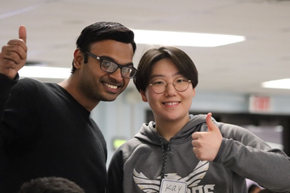
International Day of Pink is observed annually on the second Wednesday of April. The International Day of Pink is set up as an International Day against bullying, discrimination, homophobia, transphobia, and transmisogyny in cities and towns all across the world. According to mental health research, the majority of young people (66%) who are part of 2SLGBTQI+ communities have reported experiencing situations that have negatively impacted their mental health, whether it be to a big or small extent.
In 2007, two students from Nova Scotia stood up for a classmate who was being bullied for wearing pink. They encouraged their peers to wear pink as well, sending a strong message: it’s okay to be yourself. David Shepherd and Travis Price, two straight high school students from Central Kings Rural High School in Nova Scotia, witnessed a gay student being harassed for wearing a pink polo shirt. They decided to take action by buying 50 pink shirts from a nearby discount store and inviting their classmates online to join the cause against homophobic bullying. The next day, hundreds of students showed up wearing pink clothes in solidarity.
Today, people worldwide don pink shirts to show solidarity with 2SLGBTQI+ communities, continuing the fight for equality and acceptance. This movement aims to foster inclusivity and diversity in schools, workplaces, and communities across Canada and beyond.
Difference Between International Day of Pink and Pink Shirt Day
As faculty, while we teach and support our students, we also have a fiduciary responsibility to create a safe and inclusive environment for them. The first step is to educate ourselves about the real-life stories of Canadians learning how to support the 2SLGBTQI+ people in their lives.
Be an ally. Allies are individuals who support their rights and freedoms while not part of the 2SLGBTQI+ communities. They are dedicated to understanding the challenges these groups face and taking concrete steps, even small ones, to support them. There is no single way to be an ally, which can vary from person to person (Women and Gender Equality Canada, 2024). There are many ways you can be an ally:
Speaking up to tell someone that making fun of 2SLGBTQI+ people is offensive. Telling friends what someone’s correct pronouns are. Sharing accurate information when presented with stigma. Truly listening to the experiences and views of members of the 2SLGBTQI+ communities.
Attend workshops and training sessions offered at the college. Teaching and Learning offers workshops and confidential consultations to support the 2SLGBTQI+ students.
Bring the conversations to the students and raise awareness.
If you encounter difficulty supporting students from 2SLGBTQI+ or want to have a confidential consultation, contact Dr. Nasreen Sultana at Teaching and Learning.
Share this Teaching Tip
Dr. Nasreen Sultana
Nasreen Sultana, PhD, has been working in the post-secondary education for more than 14 years. Prior to joining Conestoga College, she taught in the teacher education program at Queen's University from where she completed her PhD in Education with a concentration on curriculum and assessment. In addition to her doctorate, she holds a Bachelor of Arts in English and language teaching, a Master of Arts in language teaching, and a Master of Philosophy in Education. In addition, Nasreen is a qualified administrator of IDI (Intercultural Development Inventory), a certified ISW facilitator and also earned a certificate in intercultural studies from UBC. Nasreen brings international experience and exposure to the role of the Teaching and Learning Consultant and invites discussions and learning regarding various aspects of diversity in faculty and in students. Her areas of research include intercultural communication, assessment and classroom instruction. Recently Nasreen has started learning about anti racism pedagogy and its implication in the classrooms. Please visit her profile to know more about her: https://tlconestoga.ca/about-us/nasreen-sultana/